The circular economy is transforming the construction industry by prioritising resource efficiency, sustainability, and the reduction of waste and emissions.
What is the circular economy in construction?
The circular economy in construction is a model of production and consumption that seeks to extend the useful life of materials, reduce waste, and decrease the extraction of natural resources. This involves a profound shift in the way buildings and infrastructure are conceived, considering the full lifecycle of materials from design through to demolition.
Rather than the linear “produce, use, and discard” model, circular construction promotes the reuse, recycling, and recovery of materials, ensuring that each resource serves multiple functions before its final disposal. This applies to materials such as concrete, steel, timber, and glass, analysing their environmental and energy impact at every stage.
Benefits of implementing the circular economy on construction projects
The circular economy in construction not only reduces waste and CO₂ emissions, but also generates operational efficiency, cost savings, and drives technological innovation. Projects that adopt this approach enable more efficient planning and comply with increasingly stringent environmental regulations.
For example, a building designed with modular materials can update or replace components without the need for extensive demolition, extending its useful life and reducing material waste. The main benefits include:
- Significant reduction of construction waste.
- Reduced carbon footprint and energy consumption.
- Cost optimisation and improved construction logistics.
- Compliance with green certifications and sustainability regulations.
Strategies for applying the circular economy in construction
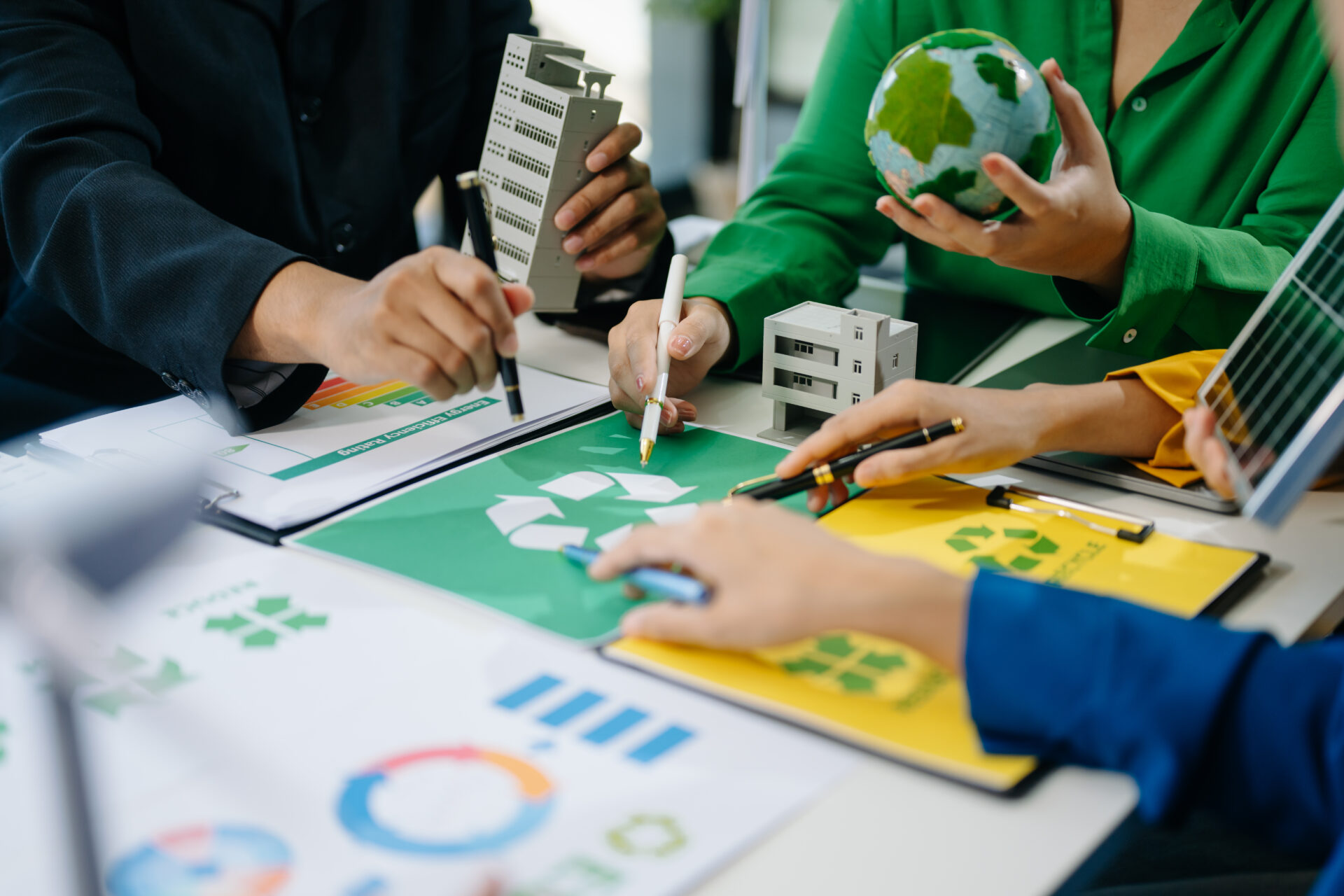
Adopting the circular economy requires changes at multiple levels. Modular and flexible design allows components to be reused and adapted to new needs. The selection of sustainable and recyclable materials is essential: recycled concrete, certified timber, and reclaimed steel are options that reduce environmental impact and support the local economy.
Waste management on site must be rigorous, with separation, recycling, and recovery systems that reincorporate materials into the production cycle. Digitalisation through tools such as BIM (Building Information Modelling) makes it possible to map materials, plan their reuse, and optimise logistics, reducing costs and increasing operational efficiency.
Success stories and global trends
Globally, the Netherlands, Germany, and Japan lead the way in implementing the circular economy in construction. In the Netherlands, some buildings are designed to be fully dismantled and reused at the end of their useful life.
Germany focuses on energy efficiency and waste reduction, whilst Japan is developing regulations that incentivise the reuse of materials in large urban projects.
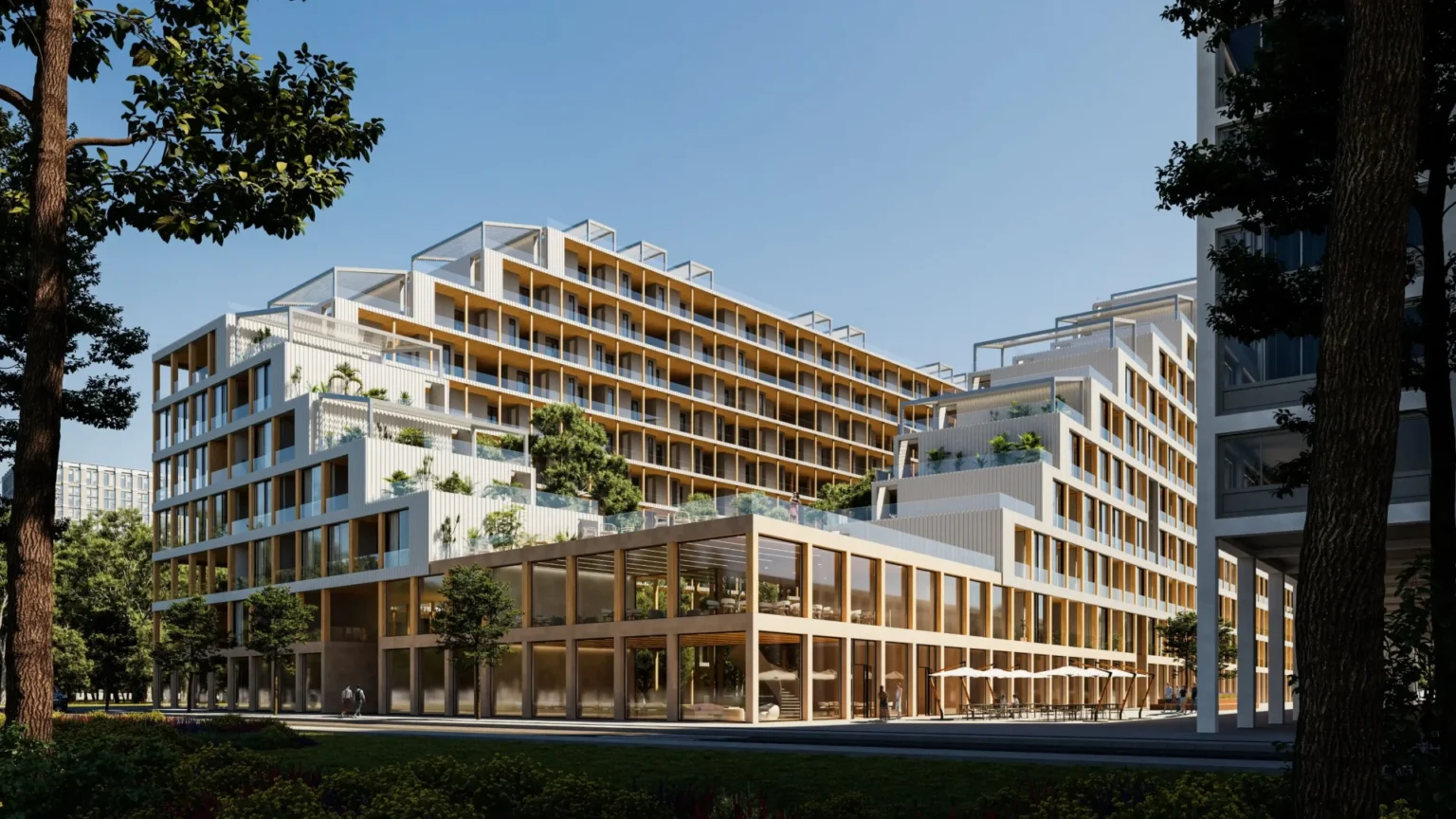
A practical example of the application of sustainable and modular principles in building is the Koinonía project, a sustainable collective housing development that integrates modular design, energy efficiency, and the use of reusable materials in its structure, demonstrating how construction can move towards more circular and responsible models.
Furthermore, green certifications such as LEED and BREEAM recognise the incorporation of circular practices, consolidating sustainability as a quality standard in construction.
The future of circular construction
The circular economy in construction is set to become a strategic pillar for the industry of the future. Technological innovations, smart materials, and digitalisation will make it possible to further reduce waste, increase energy efficiency, and create more resilient buildings. Social and business awareness is driving a cultural shift, in which investors seek out projects that are both profitable and sustainable.
Circular construction is not only a responsible practice, but also a competitive advantage: it produces adaptable, efficient, and sustainable buildings that meet global decarbonisation objectives and promote more conscious urban development. The circular economy is destined to become a global standard, where every resource has a value and every piece of waste represents an opportunity for innovation.
¿Buscas una empresa experta en proyectos innovadores y sostenibles?
¿Buscas una empresa experta en proyectos innovadores y sostenibles?