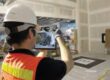

Industrial maintenance services within our industrial project engineering services are those that focus on monitoring the operation and productivity of industrial buildings, electrical, mechanical, or plumbing systems, machinery and production equipment, outdoor areas, buildings, roads, and more. This activity must be carried out periodically, and its main objective is to maintain the natural cycle of these installations unchanged.
Therefore, industrial maintenance encompasses the set of techniques used to preserve the production capacity and proper functioning of these buildings or machinery, complying with all standards related to quality and safety. It is a preventive task that allows for the detection of faults or breakdowns at an early stage, thus reducing repair and operational costs.
Why are Industrial Maintenance Services Important?
Industrial maintenance services are important for several reasons, among which the following stand out:
- Reduction of downtime: Equipment failures can halt production and cause costly downtime. Industrial maintenance reduces the likelihood of unexpected failures and minimizes the time needed for repairs.
- Increase in equipment lifespan: Regular maintenance extends the lifespan of equipment and reduces the need to purchase expensive new machinery.
- Cost savings: Regular and preventive maintenance is more cost-effective than emergency repairs and replacements.
- Improved safety: Lack of maintenance can increase the risk of accidents in the workplace. Industrial maintenance ensures that equipment is in optimal condition and that workers are safe.
- Compliance with safety and environmental standards: Industrial maintenance ensures that equipment meets safety and environmental standards, which can help avoid penalties and fines.

The predictive maintenance we apply at IDEA represents a step further in industrial maintenance or preventive maintenance services. This system allows us to monitor, at any given time, the variables that influence the condition of the asset being monitored, and which are relevant for its proper functioning.
Anticipation is key, and the difference compared to preventive maintenance is that in predictive maintenance, whenever a situation arises that could trigger an alarm, the replacement part is automatically changed, regardless of its condition. This makes it an indispensable tool, especially in large-scale plants where critical equipment is used for processes.
At IDEA, we have developed the Damage Control Methodology, which allows us to link the data generated with our BIM model and use it as an interface for a more intuitive and straightforward understanding.
The RBI (Risk Based Inspection) methodology is also used, whose systematic approach helps us assess and manage the risks associated with the operation of equipment and processes. It is based on evaluating the likelihood of failure and the potential impact of that failure on safety, the environment, and productivity. This assessment is used to prioritize inspection and maintenance, ensuring that adequate resources are allocated to the highest-risk areas. This methodology can be applied across a wide range of sectors, including the chemical, petrochemical, energy, and manufacturing industries.
Technologies for Industrial Maintenance
Technologies are key tools for efficiently and effectively managing industrial maintenance. In this regard, we will focus on exploring three types of technological applications:
-
Realidad Virtual (RV)
Virtual Reality (VR) is a technology that enables the creation of a simulated environment where training and educational activities can be carried out. In the context of industrial maintenance, VR is a useful tool for training personnel in emergency situations, familiarizing them with equipment, and practicing maintenance procedures.

-
Augmented Reality (AR)
Augmented Reality (AR) is a technology that overlays digital information onto the real world using mobile devices or special glasses. In the context of industrial maintenance, AR can be used to display relevant information about equipment, such as user manuals, circuit diagrams, and technical specifications. Additionally, AR can guide personnel through maintenance procedures, helping them identify equipment components and perform tasks more efficiently.
For this reason, through our ERIS application, we have incorporated augmented reality (AR) into our industrial maintenance services. By overlaying digitally generated images onto real elements, we are able to maximize and enrich the information obtained from these elements. This allows us to improve maintenance processes and minimize associated costs, as access to information is greatly accelerated.

-
BIM Digital Twin (BDT)
In the context of industrial maintenance, the BDT can be used for monitoring and supervising equipment, allowing for the early identification of failures and the implementation of preventive measures.
The BDT focuses on managing the complete lifecycle of assets, including maintenance and operations. This technology also allows for the simulation of scenarios and the evaluation of the effects of maintenance decisions on equipment performance.
The BDT not only has technical benefits but also has a significant impact on the sustainability and profitability of assets. By enabling scenario simulation and the evaluation of alternatives, the BDT can help reduce maintenance costs and extend the lifespan of assets.

Workplace Safety and Production Optimization
Industrial or predictive maintenance, therefore, contributes to increased workplace safety by reducing the risk of accidents that can be caused by malfunctions in machinery, equipment, infrastructure, and work areas. Similarly, these operations directly reflect on production optimization, as they ensure more efficient work.
The actions must be carried out periodically, for which it is necessary to establish a schedule that includes the dates set for these tasks. Additionally, intervention will also be required whenever potential failures are detected.
Industrial Maintenance Service Project
An example of the application of our industrial maintenance services would be the project carried out for the ILBOC plant. In this case, AR was used to provide real-time information about the plant’s equipment, allowing workers to quickly identify the equipment and parts and access relevant information about them.
Augmented Reality was implemented through a mobile application that used the device’s camera to overlay digital information onto the plant’s equipment. The application also allowed workers to perform tasks such as inventory management and requesting spare parts.
The implementation of AR at the ILBOC plant had several benefits. Firstly, it allowed workers to access relevant information more quickly and efficiently, improving efficiency and reducing downtime. Additionally, AR helped enhance safety at the plant by enabling workers to identify and avoid potential hazards.

If you’re looking for a company specialized in industrial maintenance services, look no further than IDEA! Contact us today to learn more about our services and how we can help you keep your equipment in optimal condition.
Mucho más que una ingeniería.
Mucho más que una ingeniería.