Sustainable Aviation Fuels, or SAFs, have emerged as a key option in the transition towards a low-emission air transport system.
The aviation industry faces a significant challenge in reducing its climate impact, as it accounts for approximately 2-3% of global CO₂ emissions. However, electrification—successful in other sectors—is not viable for aviation. This is because electric storage, such as batteries, has critical limitations: the energy density of current batteries is insufficient to meet flight demands without increasing the aircraft’s weight to impractical levels.
Sustainable Aviation Fuels, or SAFs (from their English acronym), derived from renewable and alternative feedstocks, have emerged as a key option in the transition to a low-emission air transport system. Interest in SAFs has grown considerably, as they enable CO₂ reductions without the need to modify the infrastructure of current aviation engines.
Definition and Types of SAF
SAFs are defined as aviation fuels produced from biomass or waste sources. There are multiple production pathways, which allow us to distinguish three main types:
- Biofuels: Derived from biomass, including used oils, animal fats, and agricultural waste. They are processed using hydrotreatment or fermentation technologies.
- Synthetic fuels (e-fuels): Produced through synthesis processes that use captured carbon dioxide (CO₂) and electrolytic hydrogen, both powered by renewable energy sources. These fuels are considered “carbon neutral” because the CO₂ used in their production is recycled, avoiding additional net emissions. However, their manufacture requires a significant amount of renewable energy, posing a major challenge for the scalability and sustainability of their production.
- Advanced fuels: Derived from unconventional waste sources, such as plastics and industrial residues. They require specialised processes of gasification and chemical reforming.
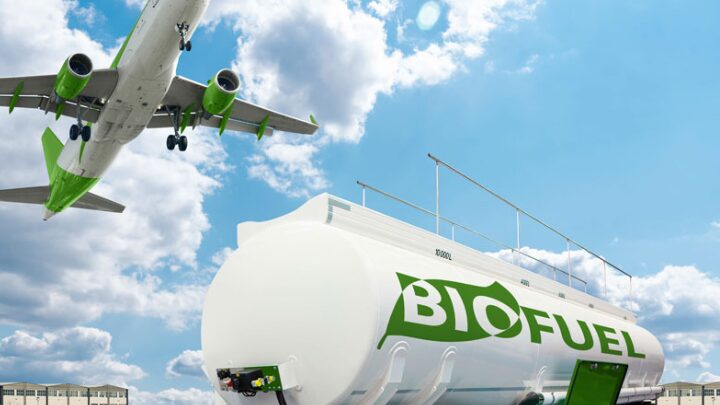
Each type of SAF has a different sustainability profile and carbon footprint, depending both on the feedstock used and the production process.
Applications in the Aerospace Sector
SAF technology allows integration into aviation engines through blending with Jet A-1 fuel, enabling immediate use in the existing aircraft fleet. This facilitates a gradual implementation of SAFs in the commercial aviation market, where test blends ranging from 10% to 50% SAF are being used, although some countries and companies are moving towards flights fully operated with SAF.
The use of SAF can reduce CO₂ emissions by up to 80% compared to conventional fossil fuels.
CO₂ Emission Reduction and Energy Efficiency
The use of SAF can reduce CO₂ emissions by up to 80% compared to conventional fossil fuels. This reduction is possible because the carbon in the feedstocks is part of a natural cycle, meaning it does not increase atmospheric CO₂ concentrations, resulting in a lower carbon footprint over the fuel’s lifecycle. Additionally, SAFs contribute to improving the sector’s energy efficiency by reducing particulate matter and other pollutants.
Their widespread implementation will depend on technological development and institutional support to overcome current barriers.
Challenges for Scalability
Despite their environmental benefits, SAFs face significant technical and economic challenges. Production is currently limited due to the high costs of feedstocks and production technologies. Large-scale economic viability will require advances in production processes, government regulatory support, and the development of distribution infrastructure to expand the availability of these fuels.
Their widespread implementation will depend on technological development and institutional support to overcome current barriers.
In conclusion, SAFs represent a promising solution to decarbonise aviation, but their widespread implementation will depend on technological development and institutional support to overcome current barriers and make sustainable aviation a reality.
¿Buscas una empresa experta en proyectos innovadores y sostenibles?
¿Buscas una empresa experta en proyectos innovadores y sostenibles?