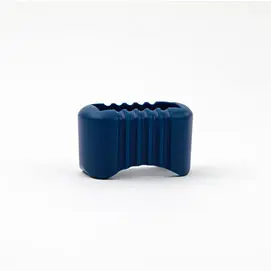
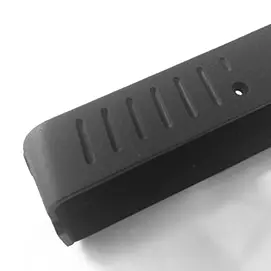
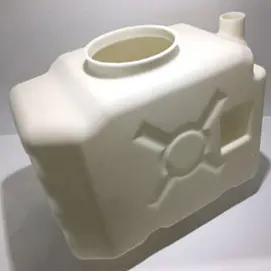
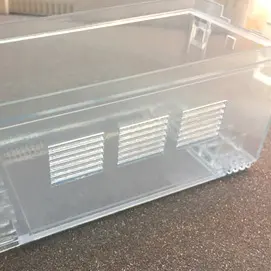
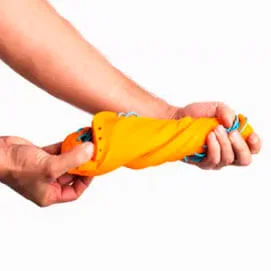
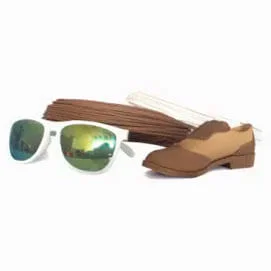
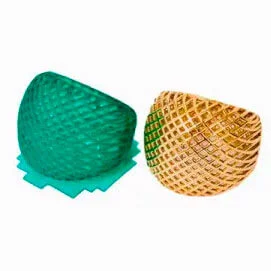
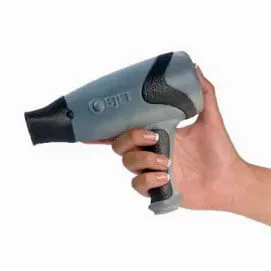
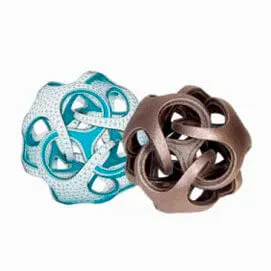
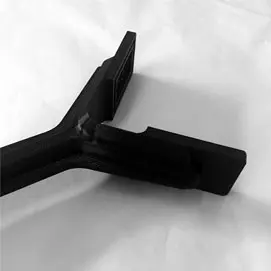
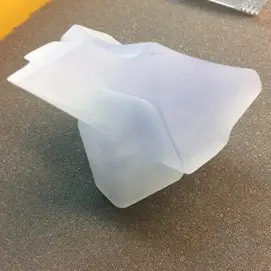
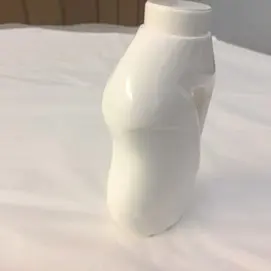
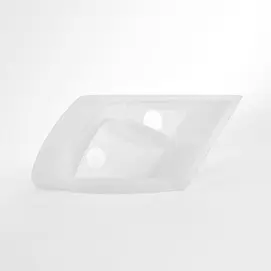
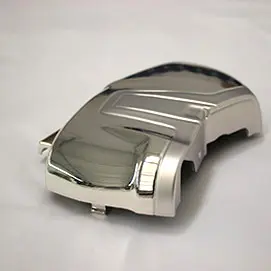
IDEA provides its customers with the application of the advancement in technology with the use of 3D additive fabrication, using them for rapid prototyping, the printing of final parts and reverse engineering.
3D additive fabrication
We provide a 360º SERVICE as a 3D model can be sent via the network to any part of the world so that it rapidly can take the form of a real object. Also with a minimum time and low development cost it allows the manufacture of spare parts, the creation of scale models and prototypes, casting moulds and small mechanisms in situ to ensure response times for technical support without the need for any stock.
With 3D PRINTING you can turn from being a consumer to becoming a creator.
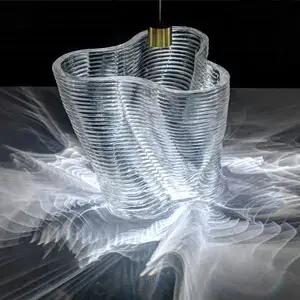
Technology which produces physical objects from 3D digital models designed by CAD software. The materials deployed are plastic (the most widespread), waxes or metals. Depending on the material, a different additive technology is used. The most widespread are extrusion and polymerization, but there are new trends (jetting, sheet lamination, power bed fusion etc.).
Technologies
Stereolithography (SLA)
Additive fabrication process which uses resin that cures via ultraviolet light in a tank and an ultraviolet laser to build objects.
Polyamide sintering (SLS)
A fabrication process which makes use of a photocurable liquid polymer bath, deploying a material in powder form (polystyrene, ceramic materials, glass, nylon and metallic materials). The laser impacts the powder and the material fuses and solidifies (sintering).
Fused deposition modelling (FDM)
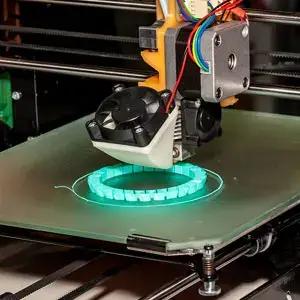
Its operation is based on the deposition of fused material on a surface, carrying out layers which are around 0.2 mm thick, the successive positioning of one coat onto another is what lends form to the object.
PolyJet photopolymer
The operation of this technology is similar to traditional inkjet printers. A liquid photopolymer is expelled and then solidifies thanks to an ultraviolet light.
Selective sintering by laser for Metals (DMLS)
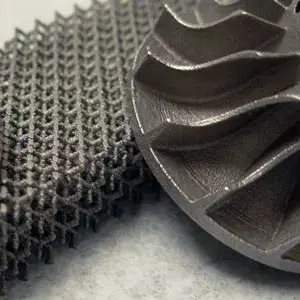
Whilst the SLS process uses as a base material plastic, ceramic or glass powder, DMLS uses metal powder. We generally find metallic materials such as steel, cobalto-chrome, aluminium, titanium or even inconel.
Sectors
Aerospace and Defence
The aerospace and defence sectors are currently the most important for additive fabrication. They are supplied with parts both in prototyped form and for final usage, obtaining light and rigid parts and with high-performance materials.
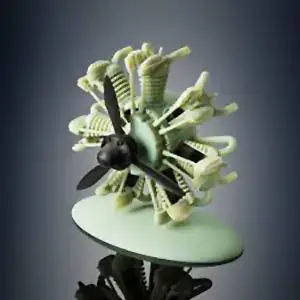
It is used for the manufacture of different elements which form parts of aircraft, vehicles and engines. From gears, axles, spares etc…
Architecture
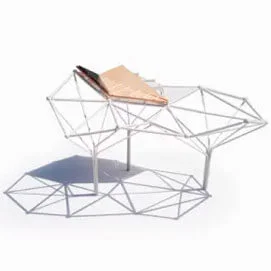
Architecture companies use additive fabrication to speed up the scale model manufacturing process and it allows you to make organic and/or complex forms.
The development of scale models and prototypes of all colours in which we can materialise them down to the finest detail as well as in the near future we will be able to design large structural and construction parts.
Engineering
Engineering companies use additive fabrication as support during the design stage as it allows you to come up with a prototype before its fabrication to see the feasibility of that which has been designed.
The various technologies allow, both in the form and in terms of the materials, for the prototype to be as true as possible to reality, leading us to minimise errors, optimise design and speed up the design/fabrication process.
Automotion
Additive fabrication within automotion is used throughout the production process of said sector, from the design and prototyping of functional parts for their subsequent operational testing, to the creation and restoration of unique and mechanical elements.
The polyvalence of materials allows you to experiment with the development of new ideas and test them out in a very short space of time, enabling a rapid response to errors.
Industrial
The Industrial sector uses it as during th3 development of a product it is necessary to come up with various prototypes to ensure that the design process complies with the criteria determined.
This technology allows you to reduce the prototyping time and you can have modified parts printed in 3D in a matter of hours. Once the design has been completed, the industrialisation process commences, verifying and testing that it meets the design requirements.
Rapid prototyping allows you to obtain a prior, affordable model of your idea or development prior to the final implementation thereof in such a way that you can detect errors or differences with the design requirements before proceeding with their final manufacture.
The manufacture of final parts allows us to carry out in a final, wholly functional manner the object or part which had been designed originally with 3D software. Said parts can be obtained in different materials which are adapted and can be varied in line with the necessary properties for the final part. The final manufacture can be carried out with different digital fabrication technologies such as FDM, SLA/DLP, SLS, Polyjet, DMLS.
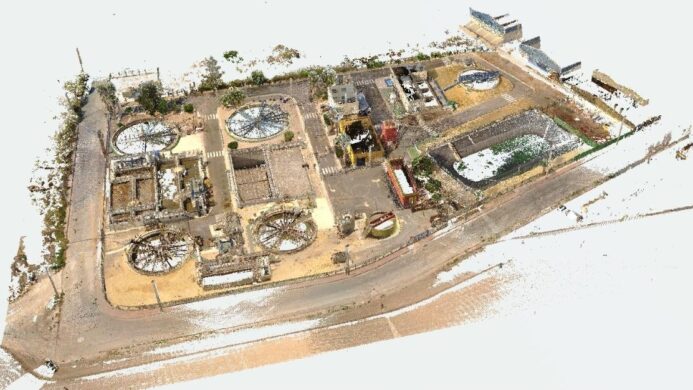
Reverse engineering is a process which consists of designing CAD geometry, being based on point cloud obtained from 3D digitalisation. Based on this CAD file, we can print the part to test any modifications and improvements which may have been carried out on it. Thanks to these techniques, we can reduce errors, optimise fabrication processes, as well as recover surfaces about which we have no data and be able to test them.
IDEA after more than 15 years has the capacity to design any type of installation with the highest quality requirements, optimizing the efficiency and profitability of the investment, adapting to each job according to the specific needs of the client.
IDEA utiliza cookies propias y de terceros para analizar tus hábitos de navegación, obtener información estadística y mostrarte contenidos relacionados.
Funcional
Always active
El almacenamiento o acceso técnico es estrictamente necesario para el propósito legítimo de permitir el uso de un servicio específico explícitamente solicitado por el abonado o usuario, o con el único propósito de llevar a cabo la transmisión de una comunicación a través de una red de comunicaciones electrónicas.
Preferencias
El almacenamiento o acceso técnico es necesario para la finalidad legítima de almacenar preferencias no solicitadas por el abonado o usuario.
Estadísticas
El almacenamiento o acceso técnico que es utilizado exclusivamente con fines estadísticos.El almacenamiento o acceso técnico que se utiliza exclusivamente con fines estadísticos anónimos. Sin un requerimiento, el cumplimiento voluntario por parte de tu Proveedor de servicios de Internet, o los registros adicionales de un tercero, la información almacenada o recuperada sólo para este propósito no se puede utilizar para identificarte.
Marketing
El almacenamiento o acceso técnico es necesario para crear perfiles de usuario para enviar publicidad, o para rastrear al usuario en una web o en varias web con fines de marketing similares.