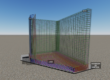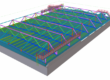

Having a 3D model allows for the detection and correction of errors.
The arrival of computers
Gone are the days when, for architectural projects, the tools of the trade were vast collections of pens with different hardness levels, colored pencils, rulers, compasses, and, above all, huge drafting tables.
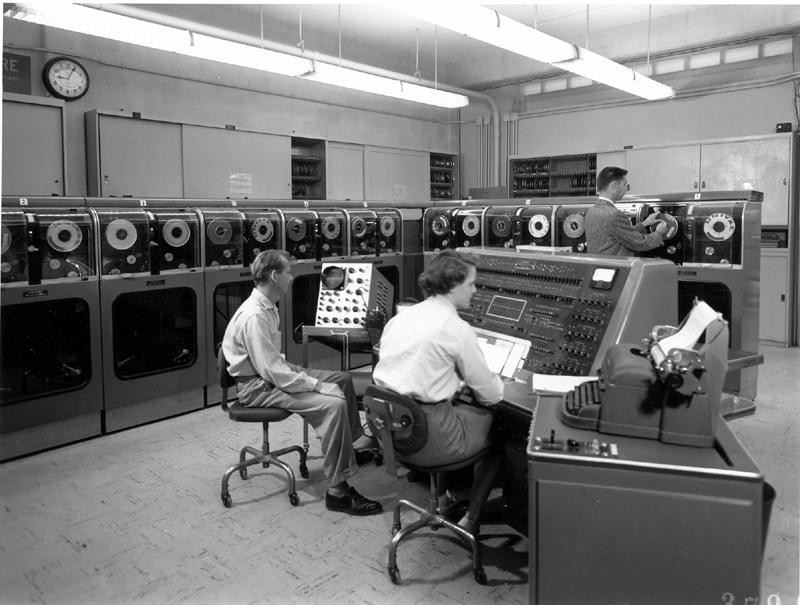
The appearance of computers at the end of the 20th century brought about a transformation in the economic, social, and technological spheres, ushering in what we now know as the third industrial revolution.
Computer-Aided Design (CAD) programs quickly became the essential tool for drafting any architectural or engineering project. Initially, they were used to transfer plans that were previously drawn on paper (in two dimensions) to the cathode ray tube (CRT) monitor.
Later, this evolved to include a three-dimensional graphical visualization, which allowed for the optimization of time and resources in the design process.

Industry 4.0
Currently, immersed in the fourth industrial revolution (Industry 4.0), it takes two hands to count the dimensions that a BIM (Building Information Modeling) model has. However, just as humans ceased to be primates once they adopted bipedal locomotion, an architectural design acquired immeasurable value when it transformed from the second to the third dimension, thus giving rise to 3D modeling.
3D modeling revolutionized the industry, making it possible for projects that used to take months to now be completed in half the time.
3D Modeling
3D modeling consists of creating a digital representation of an element using a computer-aided design (CAD) program or software. It has numerous applications, as it allows us to accurately represent products or physical elements to get a global view of how they will look once implemented. This computer-based representation has had a significant impact on the creation of architectural building projects, the simulation of industrial processes, as well as the use of infographics and the design and printing of 3D parts.
Benefits
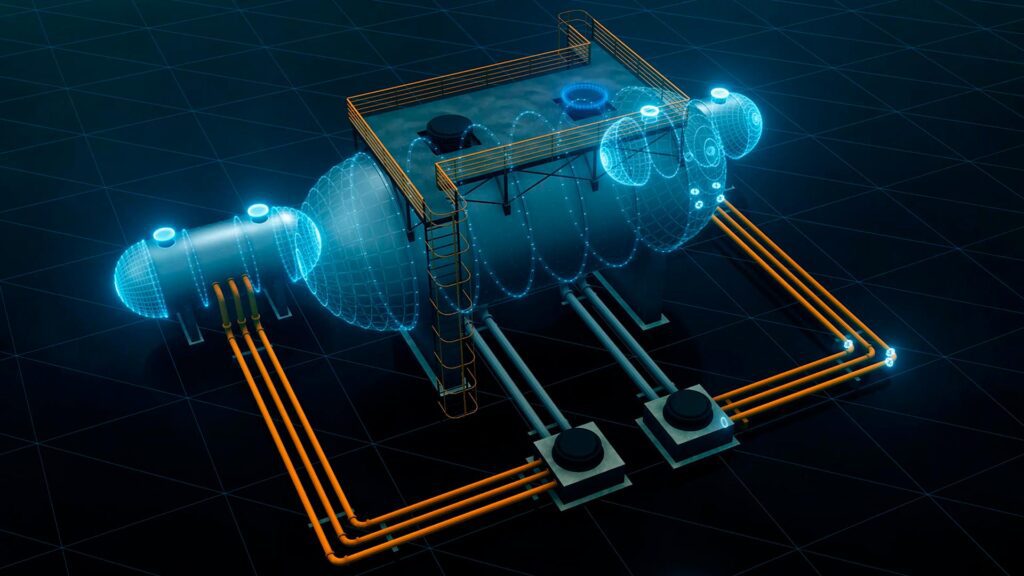
In an engineering project, having a 3D model allows for the detection and correction of errors, whether aesthetic or functional. The construction plans are created from a solid surface in the three dimensions of space, with this surface being fully parametric.
This parametrization allows for the detection of interferences between parts (topology), performing calculations and budgets, or establishing the resistance of materials and fluid behaviors in a numerical, measurable, applicable, and precise manner. This translates into greater resource optimization and faster creation of complex shapes, integrating them at the geometric, spatial, geographical, and component levels.
Another key aspect to consider is the communication or sale of the product. 3D models are inherently easier to understand than 2D plans, providing a clearer idea of what is happening in the design.
In summary, the following can be defined as the main advantages of a 3D model in an engineering project:
- Improved production time and cost reduction.
- Optimized problem-solving.
- Projects fully documented.
- Analysis and simulation capabilities.
- It allows collaboration from different professionals on the same model.
- Greater aesthetic appeal for communication.

At IDEA, we provide measurement, digitization, and inspection services to companies and institutions in the sectors of civil engineering, industry, heritage, construction, agriculture, and/or audiovisual.
We deliver qualified data through 3D scanning of reality, enabling them to make the best decisions while saving time and resources.
¿Buscas una ingeniería multidisciplinar pionera en Industria 4.0, y especializada en metodología BIM?
¿Buscas una ingeniería multidisciplinar pionera en Industria 4.0, y especializada en metodología BIM?